

Wondering whether an artificial tree or real tree is safer for your cat at Christmas? Read our advice on what type of tree is safer for your cat.
As much as we all love to have a real tree around at Christmas, they come with potential problems. Certain species of Christmas trees, especially pines, are toxic to cats. The toxicity is relatively mild, but the exposure can cause nausea, vomiting, and skin irritation.
Real trees bring that classic Christmas scent and a natural look, but they do come with potential hazards. The needles, while soft to us, can be surprisingly sharp. If ingested, they may irritate or injure your cat’s mouth, throat or stomach. Even stepping on fallen needles can be uncomfortable for sensitive paws. Regular sweeping helps, but cats are curious creatures and will likely explore the branches regardless.
Another concern is the water reservoir at the base of a real tree. Cats often see it as a tempting new drinking bowl. Unfortunately, the water can contain bacteria, mould or fertiliser residue from the tree, all of which can lead to stomach upset. Some trees are treated with fire retardants or pesticides before sale, which may leach into the water. If you choose a real tree, covering the water with a secure barrier such as a tree skirt or a guard is a great idea
The tree’s sap can also be an issue. Sticky and mildly irritating, it can cling to a cat’s fur or paws. If they try to lick it off, they may ingest something that upsets their stomach. While not usually dangerous, it’s an inconvenience that most owners would prefer to avoid.
Artificial trees, on the other hand, don’t drop needles or require water, removing two major hazards. However, they are not completely risk-free. Some cheaper models can shed small pieces of plastic or metallic fibres, which inquisitive cats may chew or swallow. These are unlikely to be toxic, but ingesting them could cause digestive problems. Choosing a well-made, good-quality artificial tree reduces this risk significantly.
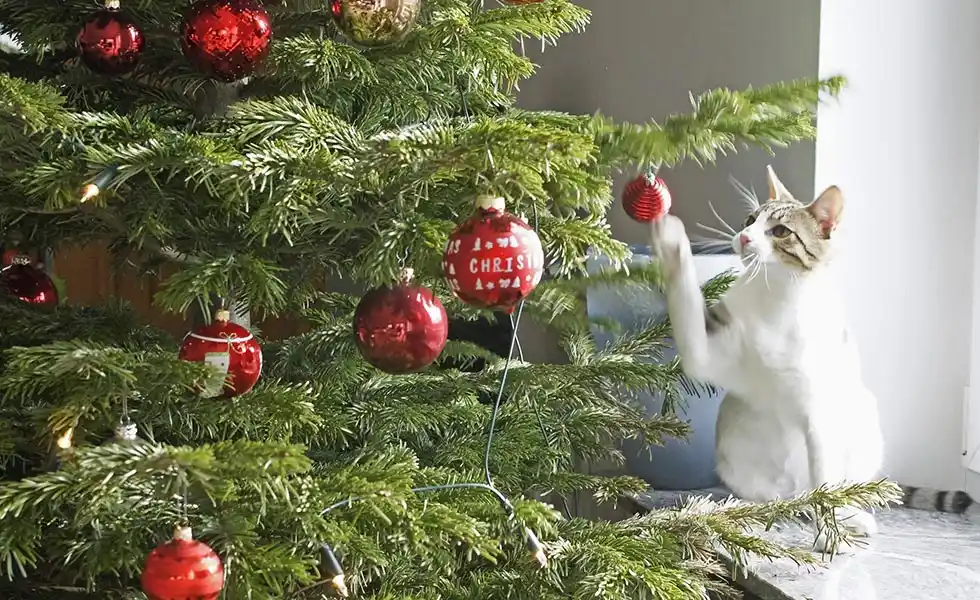
There’s also the issue of stability. Artificial trees tend to be lighter, making them easier for an adventurous cat to topple. Real trees, being heavier, can be more stable, though no tree is truly cat-proof. Whichever you choose, anchoring the tree to a wall or ceiling, using a heavy base and placing it away from launch pads like sofas or shelves will help prevent climbing disasters.
So which tree is safer? In truth, both can be perfectly safe with the right precautions. A real tree requires more maintenance and vigilance, particularly with needles and water. An artificial tree reduces those issues but still needs thoughtful placement and cat-proofing.
Obviously, many cats will never climb the tree or even attempt to chew on the branches, but we should consider the worst-case scenario.